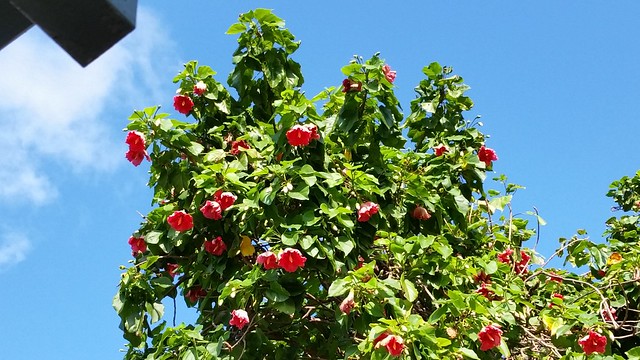
What is Puerto Rico’s national flower? The Flor de Maga (Thespesia grandiflora) a stunning tree native exclusively to the island. The flower was formally recognized through Ley Núm. 87-2019, signed into law on June 24, 2019, after decades of the Flor de Maga serving as an unofficial symbol of Puerto Rican identity.
The designation honors the tree’s longstanding cultural significance—it has appeared in Puerto Rican art, poetry, and music for generations, representing the island’s natural beauty, resilience, and enduring spirit. The law recognizes the Flor de Maga as a unique endemic species (found nowhere else in the world naturally) that embodies Puerto Rico’s environmental heritage and national character. The tree belongs to the Malvaceae family but is distinct from common hibiscus, growing as a large canopy tree rather than a shrub.
Is Flor de Maga a hibiscus? No. Although often mistaken for hibiscus (amapola), Flor de Maga is a different genus (Thespesia) and grows on a tree, not a shrub. Its larger, saucer‑like flowers, fragrant scent, and tree habit help distinguish it from common garden hibiscus.
When was it made official? Puerto Rico recognized Flor de Maga as the national flower in 2019 (Ley Núm. 87‑2019).
Key Facts About Puerto Rico’s National Flower
- National flower: Flor de Maga (Thespesia grandiflora)
- Official since: 2019 (Ley Núm. 87-2019)
- Endemic to Puerto Rico
- Not hibiscus (different genus)
- Identification: deep pink/red, cup-shaped 5 petals; heart-shaped leaves; fragrant
- Grows on a tree (not a shrub)
- Where to see: El Yunque, UPR Botanical Garden (San Juan), Jardín Botánico de Caguas
At a Glance
- Endemic to Puerto Rico – Official since 2019 (Ley 87‑2019)
- Deep pink/red, cup‑shaped, 5 petals – fragrant
- Tree height ~50–65 ft – glossy heart‑shaped leaves
- Common confusion – not a hibiscus (different genus)
- Where to see it – UPR Botanical Garden (San Juan), William Miranda Marín Botanical Garden (Caguas), moist lowland areas
The Flor de Maga (Thespesia grandiflora) is Puerto Rico’s official national flower, chosen in 2019 as a symbol of the island’s cultural identity and resilience. These distinctive deep pink or red cup-shaped blossoms grow on trees up to 65 feet tall and feature a prominent yellow-dotted pistil with an intoxicating floral scent. Unlike the hibiscus it’s often confused with, the Flor de Maga has glossy heart-shaped leaves and grows only in Puerto Rico, making it endemic to the island.
How to Identify Flor de Maga (Thespesia Grandiflora)
While many people confuse this flower with a hibiscus, it sets itself apart with several distinguishing characteristics. Flor de Maga grows on trees that can reach up to 65 feet high and boast a 20-inch diameter. Glossy heart-shaped leaves that stay green year-round set the backdrop for eye-catching deep pink or red flowers. The cup-shaped blossoms feature five overlapping petals and a prominent yellow-dotted pistil. Flor de Maga also produces an intoxicating floral scent unlike any other.
Conversely, the hibiscus comes in numerous colors and grows on a shrub or bush. Its foliage is ovate, and many species have no aroma.
How to tell Flor de Maga vs. Hibiscus
- Plant form – Flor de maga is a tree (50-65 feet); most hibiscus are shrubs (3-10 feet)
- Flower appearance – Maga blooms are larger, saucer-like with 5 broad overlapping petals and a pronounced, yellow-dotted pistil
- Scent – Flor de Maga is noticeably fragrant; many hibiscus cultivars are not
- Leaves – Maga leaves are larger, glossy, and distinctly heart-shaped
- Orgin – Flor de Maga is endemic to Puerto Rico; most hibiscus in yards are non-native cultivars from Asia or Hawaii
Where to see Flor de Maga
The Flor de Maga, a vibrant deep pink or red bloom that grows exclusively on the island and was officially designated as the national symbol in 2019. Often confused with the hibiscus, the Flor de Maga is distinguished by its cup-shaped flowers with five overlapping petals, glossy heart-shaped evergreen leaves, and a distinctive intoxicating floral scent. You can experience the Flor de Maga’s beauty at the University of Puerto Rico Botanical Gardens in San Juan, the William Miranda Marín Botanical Garden in Caguas, and throughout the island’s high-moisture areas.
Flor de Maga Symbolism in Puerto Rico’s Culture
Flor de Maga is integral to the cultural identity of our Commonwealth and its people. While various flores de Puerto Rico have inspired art, poetry, and music for generations, none embodies our national character quite like the Flor de Maga. Our beautiful island has historically gone through many intense weather events, specifically hurricanes. These trees have rebounded and let their beauty shine after each trying event. As a result, Flor de Maga is a symbol of our bravery and resilience during challenging times.
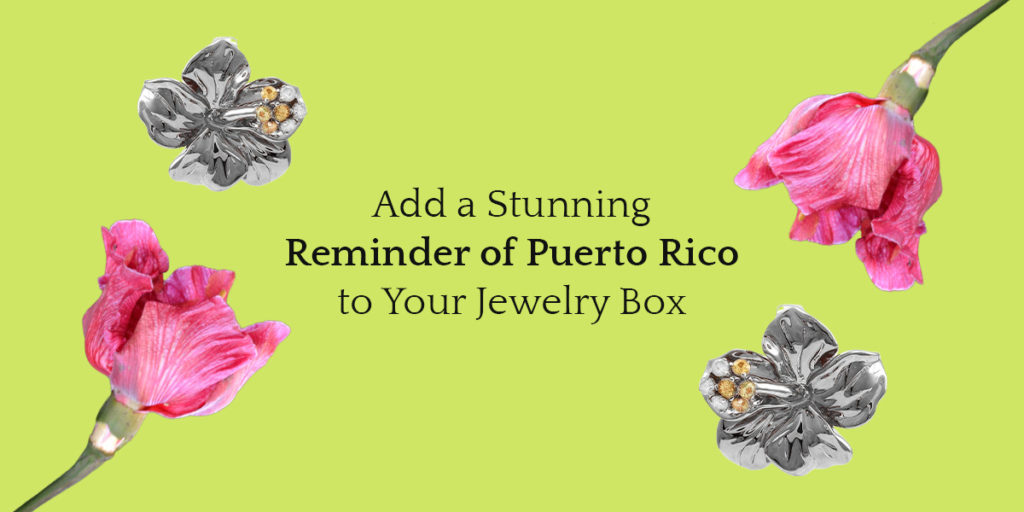
Add a Stunning Reminder of Puerto Rico to Your Jewelry Box
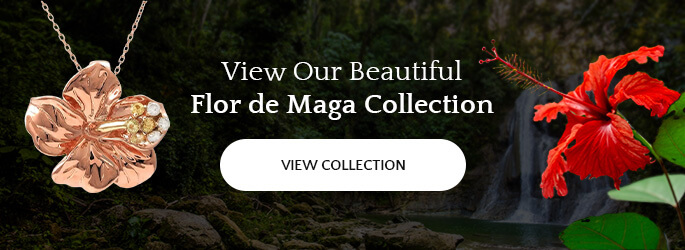
Coquí el Original®, a proud member of the N. Barquet Jewelers family, has a Flor de Maga jewelry collection to demonstrate pride in your heritage or recall a magical visit. We exquisitely handcraft our pieces drawing from four generations of gemstone and jewelry-making expertise. Our luxury designs showcase the flower in gorgeous sterling silver or 14k gold, each adorned with a dramatic cluster of diamonds and yellow sapphires.
Shop our artisan Flor de Maga jewelry online today to treat yourself or someone special.
FAQs
Flor de Maga (Thespesia grandiflora), adopted in 2019.
No—Flor de Maga is a different genus, though it’s often called “amapola.”
Botanical gardens in San Juan and Caguas, and high‑moisture lowland areas across the island.
Natural beauty, cultural identity, and island resilience.
It can flower much of the year in Puerto Rico’s climate.
Yes.
It was designated as the national flower by Ley 87‑2019.
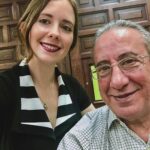
Daniela Barquet is the 4th generation owner of her family's jewelry store located in Old San Juan, Puerto Rico since 1965. The business tradition was started by her great-grandfather, Issac Barquet, in 1920. Daniela graduated from Boston University with a Bachelor's in the History of Art and Architecture and a Minor in Italian Studies. Daniela continues to grow under the mentorship of her father, Natalio Barquet Perez, who is a renowned, certified jeweler in Puerto Rico.
- Daniela Barquethttps://coquieloriginal.com/author/nataliobarquetgmail-com/

- Daniela Barquethttps://coquieloriginal.com/author/nataliobarquetgmail-com/
- Daniela Barquethttps://coquieloriginal.com/author/nataliobarquetgmail-com/
- Daniela Barquethttps://coquieloriginal.com/author/nataliobarquetgmail-com/